
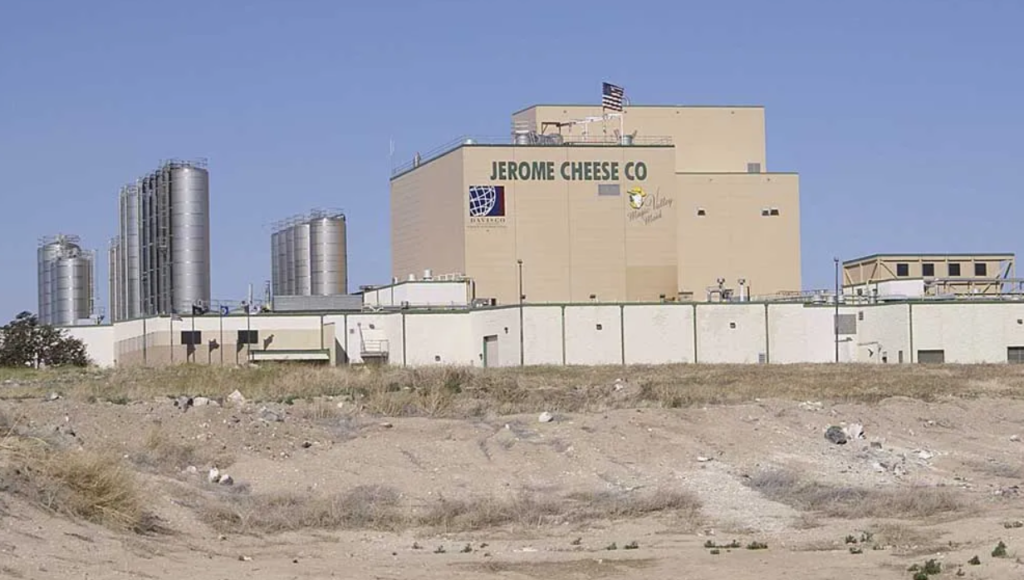
Factory-Wide Automation Stabilisation & Lean Transformation
Jerome Cheese (Davisco Foods) | Idaho, USA
Role: Automation / Improvement Engineer
Sector: High-Volume Food Manufacturing
Project Type: Operational Stabilisation & Waste Elimination
1. Executive Overview
Jerome Cheese is a high-output cheese production facility operating complex palletising robots, barrel handling systems, vacuum sealing equipment, and automated conveyor networks.
Although initially hired as an Automation / Electrical Engineer, the operational instability across multiple systems required a broader engineering intervention. I was tasked with functioning as an Improvement Engineer, leading factory-wide root cause elimination, lean optimisation, and structural reliability improvements.
The objective was clear:
Move the operation from reactive firefighting to engineered stability and predictable output.
2. Operational Challenges
The factory was experiencing:
- Recurring robotic instability
- Tons of daily product loss
- Barrel tipping and elevator overloading
- Conveyor jams and mechanical complexity
- Main drive trip-outs
- Unreliable vacuum sealing start-up
- No structured preventative maintenance systems
- Continuous need for operator supervision in unstable areas
These issues were systemic rather than isolated.
3. Strategic Engineering Approach
The intervention was structured around:
- Deep root cause analysis at PLC and mechanical levels
- Lean simplification (removing failure points rather than repairing them)
- Control logic optimisation
- Mechanical redesign where required
- Predictive risk identification
- Structured preventative maintenance architecture
- Direct reporting to Engineering Manager with cross-team collaboration
The focus was permanent elimination — not temporary repair.
4. Technical Interventions
4.1 Robotic Systems Stabilisation
Okura Columbia Models 700, 1555 & 1600
- Advanced programming and fault diagnostics
- Elimination of box slipping from robot palms
- Identification of T-axis reducer and servo degradation risks
- Led servo motor replacement and encoder re-zeroing
- Full recommissioning to operational precision
Outcome:
Unexpected robotic downtime events were completely eradicated, restoring predictable palletising performance.
4.2 Elimination of Recurring Cheese Waste
Through PLC restructuring, additional interlocks, mechanical adjustments and process optimisation:
- Daily recurring product loss was eliminated
- Barrel mis-sequencing corrected
- Product misalignment removed
- Flow instability resolved
This stopped the repeated loss of tons of cheese that had previously been considered unavoidable.
4.3 Barrel Room System Re-Engineering
Recurring failures included:
- Barrels falling from turntables
- Dual-barrel elevator entry
- Poor spacing and centring
- Scanner read failures
- Requirement for constant operator supervision
By redesigning control logic and improving mechanical sequencing:
- Barrel tipping risk eliminated
- Double entry into elevators eliminated
- Gap control stabilised
- Scanner reliability restored
- Manual supervision removed
A previously unstable high-loss area became a controlled process.
4.4 Lean Conveyor Redesign
In the boxing area, repeated jams were caused by an overcomplicated changeover ram system.
Solution:
- Implemented a 30° angled activated belt
- Removed the changeover ram entirely
Impact:
- Jam conditions eliminated
- High-maintenance component removed
- Reduced downtime
- Simplified mechanical architecture
The same design approach eliminated unjustified box rejection in the Mozzarella room.
4.5 Main Drive & Critical Fault Elimination
- Identified root cause of recurring main drive trip
- Restored stable operation
- Eliminated backlog conditions
4.6 Betavac & Mozzarella Robot Stabilisation
- Eliminated shift-start instability in vacuum sealing system
- Diagnosed and corrected unexplained mid-cycle robot stoppages
5. Preventative Maintenance & System Sustainability
At engagement, critical systems lacked structured PM regimes.
I developed and implemented comprehensive preventative maintenance frameworks for:
- 3 palletising robots
- 2 pallet & sheet dispensers
- 3 stretch wrapping machines
- Conveyors, elevators, turntables
Each PM included:
- Detailed task instructions
- Correct greasing procedures
- Failure point inspection criteria
- Structured service intervals
This transitioned the site from reactive maintenance to sustainable reliability engineering.
6. Leadership & Cross-Functional Contribution
- Reported directly to Engineering Manager
- Coordinated with automation and maintenance teams
- Managed subcontractor integration
- Commissioned new installations (ifm AS-i gateways, sensors, Tuchenhagen valves)
- Authored technical manuals
- Trained engineering and production staff
- Presented costed improvement proposals for long-term redesign
Several strategic upgrades were documented for future implementation beyond my tenure.
7. Measurable Operational Impact
- Recurring robotic downtime eradicated
- Daily cheese waste eliminated
- Barrel room instability eliminated
- Conveyor jam conditions removed
- Main drive trip events eliminated
- Operator supervision requirement reduced
- Lean process stability introduced
- Preventative maintenance architecture implemented
8. Key Capabilities Demonstrated
- Advanced PLC optimisation
- Industrial robotic stabilisation
- Lean manufacturing transformation
- Root cause elimination
- Mechanical simplification engineering
- Preventative maintenance system architecture
- Commissioning & automation integration
- Operational risk mitigation
- Board-level technical communication