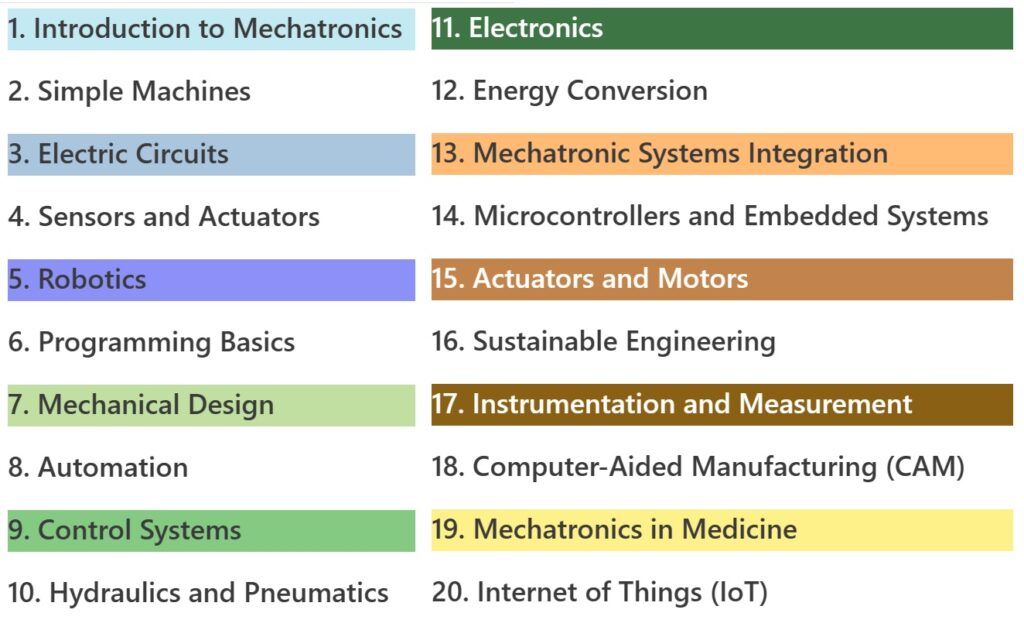
Click the simple table below to view the FULL LENGTH Mechatronics Course for Teens OVERVIEW
DISCLAIMER – This course is put together from various sources. Although the content of the course, and the questions are written and designed by Total Electrical Training, however none of the video tutorials in this course are made by us, or anyone affiliated with us. Although we’ve compiled the videos to enhance your learning of the relevant lesson, this does not mean Total Electrical Training is validating or promoting the creators of those videos or the content of their channels.
This Lessons Contains: READING, VIDEOS, QUESTIONS, and A HANDS ON PROJECT.
Understanding Energy Conversion
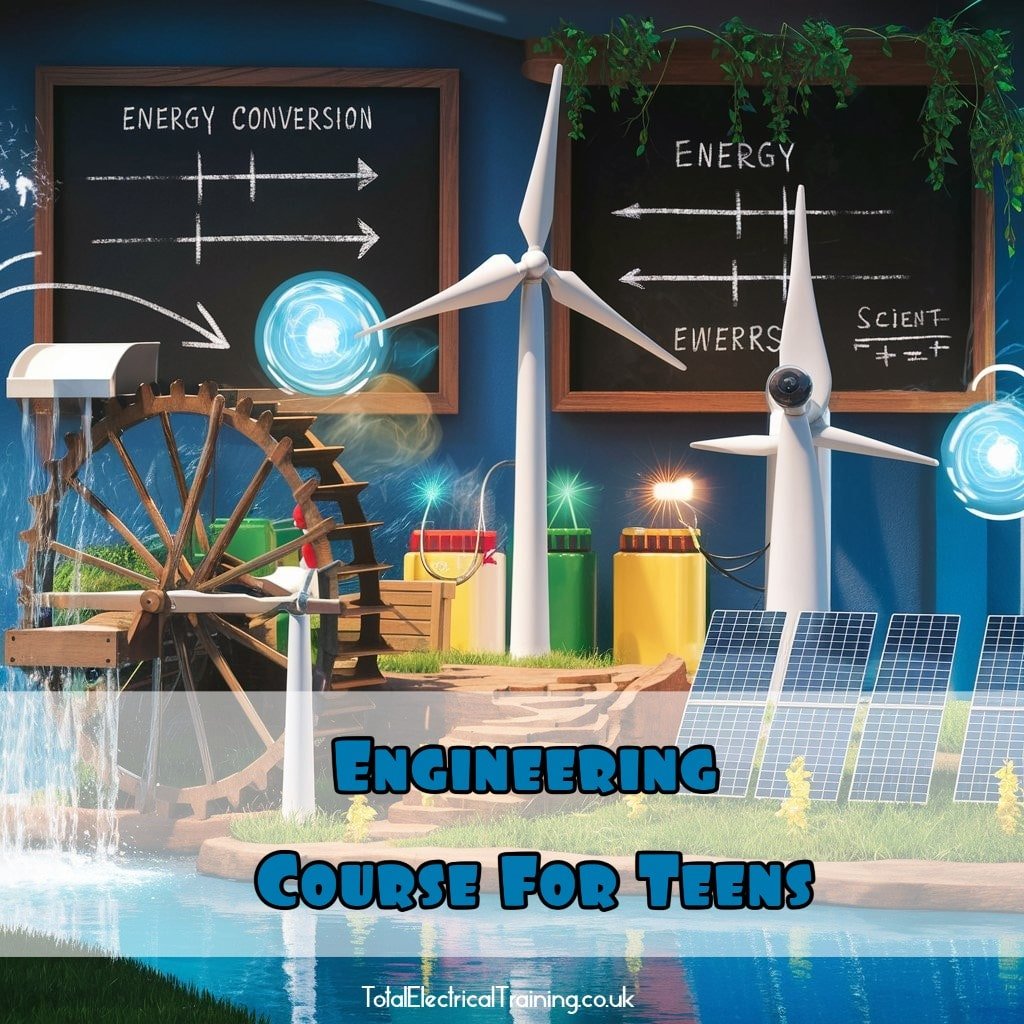
Energy conversion is a fundamental concept in physics and engineering that involves changing energy from one form to another. This process is essential for utilizing energy in various applications, from powering homes and industries to fueling transportation and electronic devices.
What is Energy Conversion?
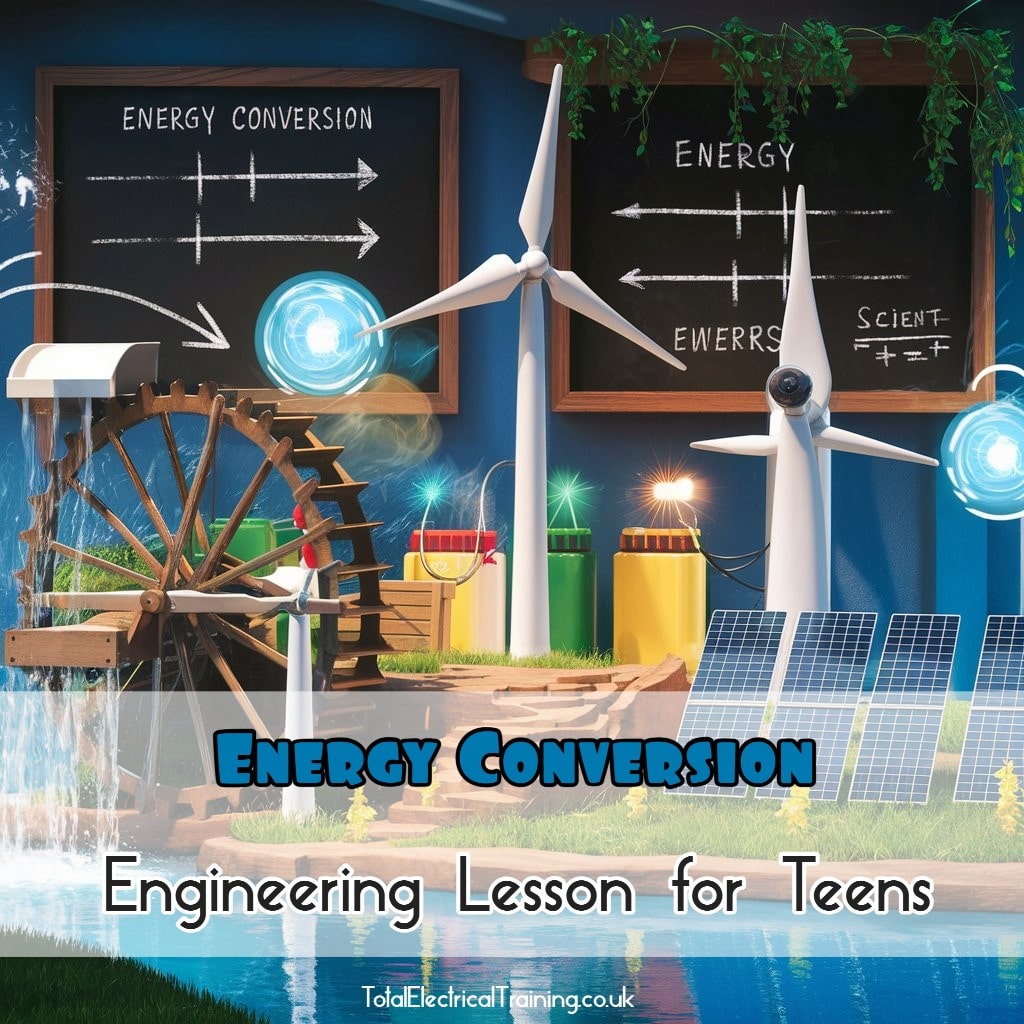
Energy conversion is the process of changing energy from one form to another. Different forms of energy include mechanical, electrical, thermal, chemical, and nuclear energy. The process of energy conversion is pivotal in the operation of numerous systems and devices. For instance, in a car engine, chemical energy from fuel is converted into mechanical energy to move the vehicle. Similarly, in power plants, various forms of energy are transformed into electrical energy to power homes and businesses.
How Do Wind Turbines Convert Kinetic Energy into Electrical Energy?
Wind turbines are a perfect example of energy conversion in action. They convert kinetic energy from the wind into electrical energy through a series of well-coordinated steps:
- Capturing Wind Energy: Wind turbines have large blades that capture the kinetic energy of the wind. When the wind blows, it causes these blades to spin.
- Rotating the Rotor: The spinning blades are connected to a rotor. As the blades turn, they spin the rotor.
- Generating Mechanical Energy: The rotor is connected to a shaft inside the nacelle (the main body of the turbine). The spinning rotor turns this shaft, converting the kinetic energy from the wind into mechanical energy.
- Producing Electrical Energy: The shaft is connected to a generator. As the shaft spins, it turns the generator, which then converts the mechanical energy into electrical energy through electromagnetic induction.
- Transmission to the Grid: The generated electrical energy is then transmitted through cables to the power grid, from where it is distributed to consumers.
What Are Renewable and Non-Renewable Energy Sources?
Energy sources are broadly classified into two categories: renewable and non-renewable.
Renewable Energy Sources
Renewable energy sources are those that can be replenished naturally in a short period of time. They are considered sustainable and have a lower environmental impact. Examples include:
- Solar Energy: Energy from the sun, which can be converted into electrical energy using solar panels.
- Wind Energy: Energy from the wind, harnessed by wind turbines.
- Hydropower: Energy from moving water, typically captured by dams.
- Biomass: Energy from organic materials like plant and animal waste.
- Geothermal Energy: Energy from the heat stored within the Earth.
Non-Renewable Energy Sources
Non-renewable energy sources are those that do not replenish quickly and can eventually deplete. They tend to have a higher environmental impact due to pollution and greenhouse gas emissions. Examples include:
- Fossil Fuels: Such as coal, oil, and natural gas, which are formed from the remains of ancient plants and animals.
- Nuclear Energy: Energy from nuclear reactions, primarily using uranium or plutonium.
Why is Energy Efficiency Important?
Energy efficiency refers to using less energy to perform the same task, thereby reducing energy waste. Improving energy efficiency is crucial for several reasons:
- Environmental Protection: Reducing energy consumption decreases the demand for energy production, which in turn reduces greenhouse gas emissions and pollution. This helps mitigate climate change and protect natural ecosystems.
- Economic Benefits: Energy-efficient technologies and practices can significantly lower energy bills for consumers and businesses. It also reduces the need for costly energy infrastructure and resource extraction.
- Resource Conservation: Efficient energy use ensures that we make the most of our available resources, extending the lifespan of non-renewable energy sources and reducing the strain on renewable resources.
- Energy Security: By reducing dependence on non-renewable energy sources, countries can enhance their energy security and reduce vulnerability to energy supply disruptions.
- Improved Quality of Life: Energy efficiency can lead to better air quality, reduced health risks, and overall improved living conditions, as less pollution is released into the environment.
Conclusion
Energy conversion is a vital process that enables the practical use of various forms of energy. Wind turbines exemplify how kinetic energy can be transformed into electrical energy, showcasing the importance of renewable energy technologies. Understanding the distinction between renewable and non-renewable energy sources is crucial for developing sustainable energy strategies. Moreover, enhancing energy efficiency is essential for environmental protection, economic savings, resource conservation, energy security, and improving the overall quality of life. As we move towards a more sustainable future, focusing on efficient and renewable energy solutions will play a key role in addressing global energy challenges.
Hands on Project for this Lesson – Create a wind turbine model
The video below might come in helpful or you can find your own resources to create a wind turbine model.
Questions
- What is energy conversion?
- How do wind turbines convert kinetic energy into electrical energy?
- What are renewable and non-renewable energy sources?
- Why is energy efficiency important?
- Bonus: Research advancements in renewable energy technologies.
Ready to take a dive into Electrical Engineering to get a head start on College or University, or simply expand your DIY knowledge?
Check out our meticulously designed course in Electrical/Electronic Engineering for all walks of life, from any country. Delivered by Professor F. Tavassoli.

Buy me a Coffee
If this page has been extremely helpful, you can always buy me a digital coffee to express your thanks for the information I’ve put together to help eager minds excel in their knowledge, learning and success.
Your kind donation makes it possible for me to continue creating amazing content, courses and fulfil my dream of keeping the majority of what I make FREE and Ad FREE!!!
Thank you from the bottom of my heart, and abundant blessings to you!
Join students and professionals
from across the world increasing their knowledge of Electrical Engineering.
One email at a time
We never send spam or give your information to anyone, Privacy Policy here.
DISCLAIMER – This course is put together from various sources. Although the content of the course, and the questions are written and designed by Total Electrical Training, however none of the video tutorials in this course are made by us, or anyone affiliated with us. Although we’ve compiled the videos to enhance your learning of the relevant lesson, this does not mean Total Electrical Training is validating or promoting the creators of those videos or the content of their channels.