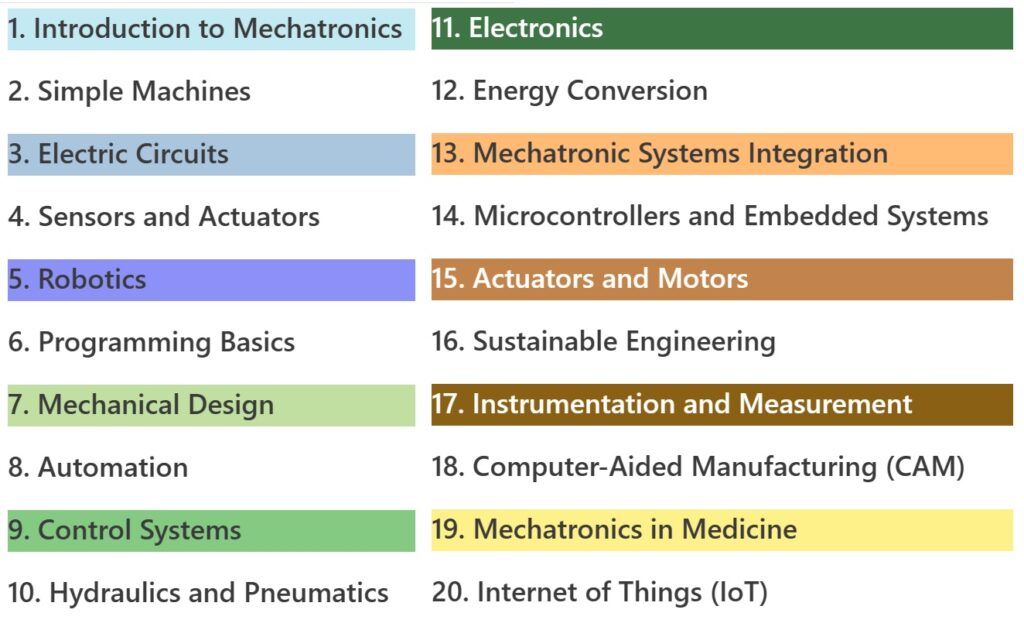
Click the simple table below to view the FULL LENGTH Mechatronics Course for Teen OVERVIEW
DISCLAIMER – This course is put together from various sources. Although the content of the course, and the questions are written and designed by Total Electrical Training, however none of the video tutorials in this course are made by us, or anyone affiliated with us. Although we’ve compiled the videos to enhance your learning of the relevant lesson, this does not mean Total Electrical Training is validating or promoting the creators of those videos or the content of their channels.
This Lessons Contains: READING, and QUESTIONS
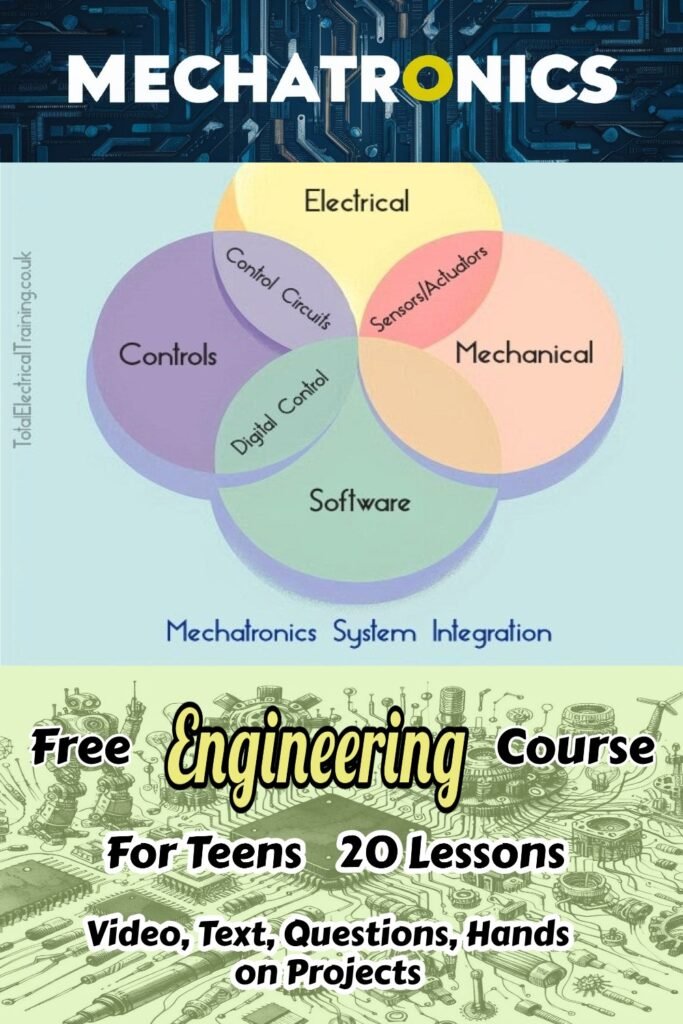
Mechatronic Systems Integration: A Comprehensive Guide
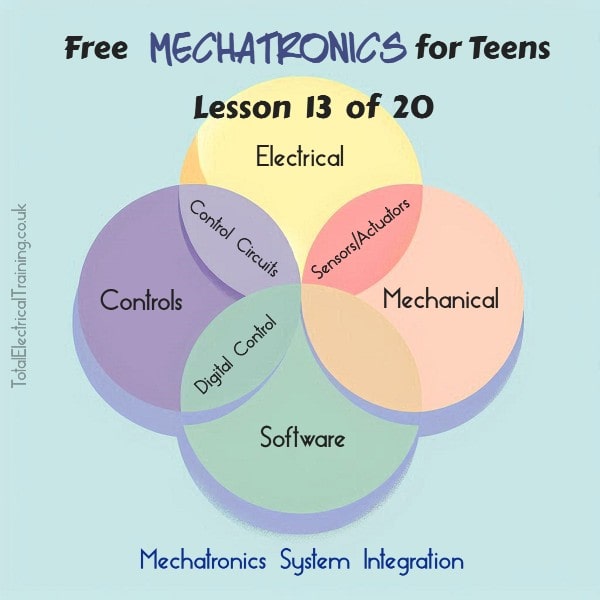
Mechatronic systems integration is a multidisciplinary field that merges mechanical engineering, electronics, computer science, and control engineering to create and enhance complex systems. These systems are prevalent in various industries, including automotive, aerospace, manufacturing, robotics, and consumer electronics. Understanding how to effectively integrate these diverse components is crucial for the development of efficient, reliable, and innovative mechatronic systems. This article will explore the concept of systems integration in mechatronics, the interaction of different components, the challenges faced, and the methods used to test integrated systems.
What is Systems Integration in Mechatronics?
Systems integration in mechatronics involves the seamless combination of various subsystems and components to function as a unified system. This process requires a holistic approach, considering both the individual performance of each component and their interactions within the system. The goal is to ensure that the integrated system performs its intended functions efficiently and reliably.
Key Elements of Mechatronic Systems Integration
- Mechanical Components: These include structures, actuators, and sensors that form the physical foundation of the system.
- Electronic Components: These involve circuits, microcontrollers, and power supplies that control and power the mechanical components.
- Software: This includes the algorithms and control systems that govern the behavior of the entire system.
- Control Systems: These are the feedback and control mechanisms that ensure the system operates correctly and responds to changes in its environment.
The Integration Process
The process of integrating mechatronic systems involves several stages:
- Design: Defining the specifications and requirements for each component and the overall system.
- Development: Creating and assembling the individual components.
- Integration: Combining the components and ensuring they work together harmoniously.
- Testing: Verifying that the integrated system meets the desired performance criteria.
- Deployment: Implementing the system in its intended environment and monitoring its performance.
How Do Different Mechatronic Components Work Together?
The synergy between different mechatronic components is essential for the functionality of the integrated system. Each component must interact seamlessly with others to achieve the desired outcomes. Here’s how various components typically work together:
Mechanical and Electronic Components
Mechanical components such as actuators and sensors are often controlled by electronic circuits and microcontrollers. For example, an actuator might be used to move a robotic arm, while sensors provide feedback on its position and movement. The electronic components process this feedback and adjust the actuator’s actions to achieve precise control.
Software and Control Systems
The software plays a crucial role in mechatronic systems by implementing control algorithms that dictate how the system responds to various inputs. Control systems, often implemented in software, use feedback from sensors to adjust the actions of actuators. For instance, in an autonomous vehicle, the software processes data from cameras and other sensors to navigate and avoid obstacles.
Communication and Networking
Modern mechatronic systems often involve multiple subsystems that need to communicate with each other. This requires robust communication protocols and networking capabilities. For example, in a manufacturing plant, different robotic systems might need to coordinate their actions, requiring real-time data exchange and synchronization.
What Challenges Arise in Integrating Complex Systems?
Integrating complex mechatronic systems presents several challenges, including:
Compatibility Issues
Ensuring that different components are compatible in terms of physical connections, communication protocols, and operational requirements can be challenging. Incompatibilities can lead to system failures or suboptimal performance.
Complexity Management
As the complexity of the system increases, managing the interactions between components becomes more difficult. This requires sophisticated design and integration strategies to ensure that all parts work together without conflicts.
Reliability and Robustness
Integrated systems must be reliable and robust to perform consistently under various conditions. This involves designing for fault tolerance and redundancy, which can be challenging and costly.
Testing and Validation
Thorough testing and validation are crucial to ensure that the integrated system meets all performance and safety requirements. However, testing complex systems can be time-consuming and requires specialized tools and techniques.
Cost and Time Constraints
The integration process can be expensive and time-consuming, especially for large-scale systems. Balancing the need for thorough integration with cost and time constraints is a significant challenge.
How is Systems Integration Tested?
Testing is a critical phase in the integration of mechatronic systems. It ensures that the system performs as expected and identifies any issues that need to be addressed. Several methods are used to test integrated systems:
Simulation
Simulation is often used in the early stages of testing to model the behavior of the system under various conditions. This helps identify potential issues before physical components are assembled.
Hardware-in-the-Loop (HIL) Testing
HIL testing involves integrating some physical components with simulated ones to test specific parts of the system in a controlled environment. This allows for more detailed testing of individual components and their interactions.
Functional Testing
Functional testing verifies that the integrated system performs its intended functions correctly. This involves running the system through various scenarios and checking that it behaves as expected.
Stress Testing
Stress testing subjects the system to extreme conditions to ensure it can handle unexpected loads and stresses. This helps identify potential points of failure and improve the system’s robustness.
Safety Testing
Safety testing is crucial for ensuring that the system operates safely under all conditions. This involves testing fail-safes, emergency shutdown mechanisms, and other safety features.
Field Testing
Field testing involves deploying the system in its intended environment and monitoring its performance over time. This provides real-world data on how the system operates and helps identify any issues that were not apparent in controlled testing environments.
Conclusion
Mechatronic systems integration is a complex but essential process that combines mechanical, electronic, and software components into a cohesive whole. The success of this integration hinges on understanding how different components interact, overcoming the challenges that arise, and rigorously testing the integrated system. By addressing these aspects, engineers can develop innovative, reliable, and efficient mechatronic systems that meet the needs of various industries.
Questions
- What is systems integration in mechatronics?
- How do different mechatronic components work together?
- What challenges arise in integrating complex systems?
- How is systems integration tested?
- Research Question: Look into a real-world example of a mechatronic system.
Ready to take a dive into Electrical Engineering to get a head start on College or University, or simply expand your DIY knowledge?
Check out our meticulously designed course in Electrical/Electronic Engineering for all walks of life, from any country. Delivered by Professor F. Tavassoli.

Buy me a Coffee
If this page has been extremely helpful, you can always buy me a digital coffee to express your thanks for the information I’ve put together to help eager minds excel in their knowledge, learning and success.
Your kind donation makes it possible for me to continue creating amazing content, courses and fulfil my dream of keeping the majority of what I make FREE and Ad FREE!!!
Thank you from the bottom of my heart, and abundant blessings to you!
Join students and professionals
from across the world increasing their knowledge of Electrical Engineering.
One email at a time
We never send spam or give your information to anyone, Privacy Policy here.
DISCLAIMER – This course is put together from various sources. Although the content of the course, and the questions are written and designed by Total Electrical Training, however none of the video tutorials in this course are made by us, or anyone affiliated with us. Although we’ve compiled the videos to enhance your learning of the relevant lesson, this does not mean Total Electrical Training is validating or promoting the creators of those videos or the content of their channels.